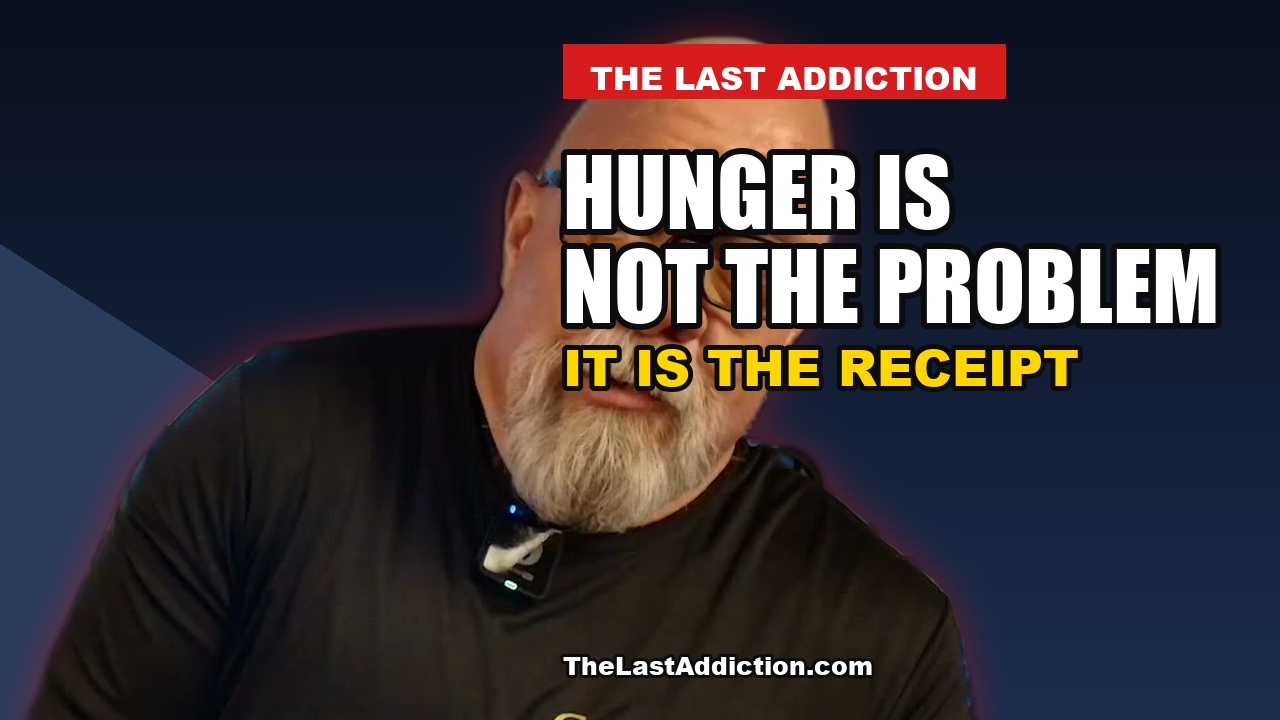
Hunger Is Not the Problem, Read This
There is a man scrolling through his phone right now, reading the same three sentences everybody reads before they try this.
Nobody can stay in a deficit they hate. The body fights back after three weeks. Hunger becomes unbearable, and then you quit, and you blame yourself for lacking willpower.
I am not a doctor. I am not a coach. I am going to tell you something today that almost nobody selling you anything will say out loud.
I want to take that apart, and I want to be fair to the other side before I do, because the other side is not stupid and it is not lying.
What the discourse actually says
I pulled it yesterday afternoon. It splits three ways. One post says hunger kills most diets, not willpower. A second says nobody can stay in a deficit they hate, the body fights back, and then you blame yourself. A third gets the actual science right: eating less means more hunger, that is normal, that is not a lack of willpower, because lower food intake raises the hunger hormone ghrelin.
Hold all three of those at once, because look at what they add up to. Everybody agrees on the mechanism. You eat less, ghrelin goes up, you get hungry. That is not a debate. That is plumbing.
And the entire industry takes that agreed fact and draws exactly one conclusion from it. Hunger is the enemy, so let us engineer it away for you. Buy the shake. Buy the drug. Buy the protocol where you never have to feel it. Painless. No willpower required.
I understand why that sells. It sells because it is the thing every single one of us wants to be true.
Why nobody sells you the truth
There was a fourth post in that same sweep, and it was not about food at all. It was about workouts, and it made a point that applies here whether the person writing it knew it or not. The fitness industry sells the workout for one reason. A workout can be sold. Memberships, trackers, programs, coaches, supplements. Nobody sells you sleep, because sleep has no margin on it.
Painless has the same problem in reverse. Painless sells beautifully, because painless is a product. The hunger does not sell anything to anybody, which is exactly why nobody wants to tell you the truth about it.
A deficit means your body needs more energy than you just handed it, so it goes and gets the difference off of you. That is the transaction. There has never been another one.
The feeling it produces while it does that is not the process failing. That is the process handing you the invoice. So when somebody sells you painless, understand what they are actually selling: a way to not feel the one signal that tells you the thing is working.
23 years reading reports
Here is the part that has nothing to do with food.
I spent 23 years as a Big City Motor Cop with the LAPD, and for 23 years my entire job was listening to a story explaining why the thing that happened was not the fault of the person standing in front of me.
Everybody has a story. Most of them are true, or some version of true. There are usually three versions of it: yours, theirs, and God's own actual truth. The car did swerve. The light was yellow. And in this case, the food industry really did spend 30 years and a research budget bigger than most cities finding the exact mix of ingredients that overrides the signal in your brain that says stop. That is not me being generous. That is documented. That is their own research, not mine.
Here is the thing about a true story: a true story can still be an excuse. I did not understand that until it was my own case file, sitting on my own kitchen table.
If you sat down tonight and wrote out every reason you are the size you are, you would write a true document. Genetics. A schedule that never lets up. A childhood that taught you food was love, or food was safety, or food was the only thing in the house that was actually yours. An industry that spent decades studying exactly how to keep you coming back.
Every line of that report is accurate. I could sign it. I have signed worse reports about better men.
Whose fault, versus whose job
Those are two separate questions. You can spend the rest of your life litigating the first one, and plenty of good people do. They are still standing in the same kitchen ten years later with a better vocabulary for why.
Only you can answer the second question. It has always been you, and it will always be you, no matter how airtight the report gets.
That is the whole case, and here is the verdict I am handing down on myself, out loud, on camera, where I cannot take it back.
You got yourself to this place. Not because you are weak, and not because an industry did not spend real money studying how to beat you, because they did, and they are very good at their job. You got yourself here because whose job it is to walk you out has never once depended on whose fault it is that you are standing there.
You are going to have to pull up your manpants and make it happen.
I know how that sounds sitting next to a paragraph about ghrelin and research budgets. I put both there on purpose, back to back, because I want you to hear them collide. The science is real, and the sentence still stands. Explained is not the same as excused.
The best case for the other side, one more time
The post about the body fighting back at three weeks is describing something real. People do quit at week three. That is measured, not invented, and telling somebody to just try harder at week three has a failure rate you could set your watch by.
I am not telling you to try harder. Trying harder is not a plan, it is a feeling, and feelings clock out the second the kitchen gets quiet. I am telling you to stop treating the true report as the finish line.
Here is where the two sides actually meet, because they are not as far apart as the argument makes them sound. The science side is right that willpower is not a muscle you flex harder at 9:30 at night. The accountability side is right that somebody still has to walk through the door every single night regardless.
The answer is not more willpower standing at the door. The answer is fewer decisions happening at the door at all. You do not out-willpower a hungry brain standing in a kitchen at night. You decide once, in daylight, with a full stomach and a clear head, what is allowed to walk through that door and what is not.
That one decision, made once, does more work than a thousand nights of gritting your teeth against a signal your own body is generating on purpose.
The one new move: explanation, or verdict
This is not another eating protocol. You already have one from Monday. This is the piece underneath it.
Tonight, before anything else
Write one sentence. The sentence you would put in the report explaining why not today. Write the real one, not the polished one, not the one that sounds good out loud.
Then read it back to yourself the way I used to read a report back before I signed it, put my name on it, and handed it to the watch commander for his own approval on top of mine.
Ask yourself the only question that mattered in 23 years of asking it for a living: is this an explanation, or is this a verdict?
If it explains how you got somewhere, keep it. It is true, it is useful, and it belongs in the file. Genetics belongs in the file. A brutal week belongs in the file.
If it is deciding what happens next on your behalf, cross it out, because that decision does not belong to a sentence written in a moment of hunger at 9:30 at night. It belongs to you, in daylight, and you already made it once.
Here is what it actually looks like. Say the sentence is, I had a brutal day at work and I deserve this. Read it back. Is that deciding what happens tonight, or is it explaining how you got to 8 PM tired? It is explaining how you got to 8 PM tired. Keep it, and eat the meal you already planned anyway.
Now say the sentence is, one bite will not matter tonight. Read that one back the same way. That sentence is not describing anything that already happened. It is deciding what happens next, right now, using a moment of hunger as the judge. Cross it out.
Same brain, same night, two sentences that sound almost identical, and only one of them gets a vote. That is the entire skill, and it gets easier the more nights you run it.
What your kids are actually watching
Your kids are watching which pile you sort things into far more than they are watching what is on your plate. They will run whatever sorting method they watch you use on their own hardest thing someday, whatever that turns out to be for them. You do not get to pick which lesson lands. You only get to pick which one you are teaching.
You do not get the credit for that in real time. You do not need it.
134 pounds is arithmetic
I am 57 years old. There is no pension coming for this. I do not get a mulligan on the next 10 years the way I might have gotten one at 30, and if you are anywhere close to my age, neither do you.
The number on the scale is what it is, and I am not going to stand here and pretend a number is the point of tonight's show. The point is that it came from one decision, made on an ordinary day with nothing special about it, defended every single night since, one true report at a time, sorted straight into the right pile.
Not because the science does not matter. It matters. Ghrelin is real. The industry's own research is real. Your true report is real.
It is just not the verdict. It never was.
Blame is not the same word as responsibility
Somebody watching this is going to try to use the whole argument against himself. He is going to say: if it is not about willpower and it is not about blame, then why does it feel like my fault every single night at 9:30?
Here is the answer. It feels like your fault because you are the one standing in the kitchen, and you are the one who gets to decide, and both of those things are true at the same time as the true report sitting next to them.
You can hand blame to an industry that earned it and still keep responsibility for yourself, because nobody else was ever going to be standing in that kitchen at 9:30 anyway.
One thing I owe you straight. I could not get into the public forums this morning where people argue about this without a product sitting in front of them, so what I quoted came off X yesterday afternoon and I described the substance of it straight as I went, rather than inventing anything.
And I am not a physician. If you are on blood pressure medication, a statin, or metformin, do not change anything because a guy with a camera got loud tonight. Talk to your own doctor about any change you are making, and let a licensed professional manage your medication on their own schedule. That is not defiance. That is doing this the right way.
Write the sentence tonight. Sort it into one of the two piles. Then act like the second pile does not get a vote, because as of tonight, it does not.
Everything is at The Last Addiction. I am doing this with you, not ahead of you.
Go there tonightQuestions this answers
If a deficit is not painful, is it working?
Question the premise. A deficit means your body needs more energy than you handed it, so it goes and takes the difference off you. The feeling that produces while it happens is not the process failing, it is the process handing you the invoice. Selling you painless is selling you a way to not feel the one signal that tells you it is working.
Is it my fault or the food industry's fault that I am overweight?
Both, and they answer two different questions. Whose fault is it, and whose job is it to fix it, are not the same question. You can be completely right about how you got here and still be the only one who can walk yourself out. The industry set the trap. Nobody else was ever going to be standing in your kitchen at 9:30 anyway.
What is the difference between an explanation and a verdict?
An explanation is a true account of how you got somewhere. A verdict is a decision about what happens next. Genetics belongs in the file as an explanation. A sentence like one bite will not matter tonight is not explaining anything that already happened, it is deciding what happens next using a moment of hunger as the judge. Keep the explanations. Cross out anything trying to cast a vote.
What is the difference between blame and responsibility?
Blame looks backward and asks who did this to you. Responsibility looks forward and asks who does something about it now. You can hand blame to an industry that earned it and still keep responsibility for yourself, because nobody else was ever going to be the one standing in your kitchen.
What is the one new move in this episode?
Before anything else tonight, write one sentence: the real reason you would give for not tonight. Read it back and ask one question, the same one asked of every incident report for 23 years. Is this an explanation, or is this a verdict. If it explains how you got somewhere, keep it. If it is deciding what happens next, cross it out.